UTI AMC IPO opens on September 29th: 10 key things you should know about
UTI AMC (Asset Management Company) is set to launch its initial public offering on September 29th. The Anchor book opens for a one-day subscription on September 28th whereas the issue closes on October 1st.
Equity shares are listed on the BSE and the National Stock Exchange. Kotak Mahindra Capital Company, Axis Capital, Citigroup Global Markets India, DSP Merrill Lynch, ICICI Securities, JM Financial, and SBI Capital Markets are the lead managers for the offer.
Here are 10 key things you should know about UTI AMC IPO before subscribing:
1) About the issue
The IPO includes a sale offer of 3,89,87,081 equity shares by five shareholders.
State Bank of India, Life Insurance Corporation of India, and Bank of Baroda sold 1,04,59,949 equity shares each through a public issue, while Punjab National Bank and Tro Price International (TRP) split 38,03,617 equities every share does.
This offer includes a reservation of up to 2 lakh equity shares for eligible employees. The total offer is at least 30.75% of the company’s post-offer paid-up equity.
One can bid for at least 27 equity shares and then in multiples of 27 equity shares.
2) Price Band
The price band of this offer has been fixed at Rs. 552 to Rs. 554 per equity share.
3) Funds to Raise
UTI AMC aims to earn Rs. 2,152 crores at lower prices and Rs. 2,160 crores at the upper price band.
4) Objects of Offer
The listing of equity shares on stock exchanges and the attainment of the benefits of the sale of equity shares up to 3,89,87,081 by the shareholders of the sale are the objects of the initial public offering. Whereas all money raised from public issues goes to sell to shareholders after deducting offer costs and related taxes. The company will not receive revenue from the offer.
5) Company Profile and Industry
UTI AMC is the second-largest asset management company in India in terms of total AUM. Whereas the mutual fund is the eighth largest asset management company in India in terms of QAAUM as of June 2020. However, the company offers a diverse group of individual and institutional investors through a wide variety of funds and services.
It manages UTI Mutual Fund’s domestic mutual funds, provides portfolio management services (PMS) to institutional clients and high net worth individuals (HNIs), and manages retirement funds, offshore funds, and alternative investment funds.
CRISIL
It operated 153 domestic mutual fund schemes consisting of equity, hybrid, income, liquid, and money market funds as of June 2020. The total QAAUM of UTI AMC for domestic mutual funds is Rs. 1,33,630 crores, while the other AUM is Rs. 8,49,390 crores. With 1.09 crores live folios by March 2020, its client base accounted for 12.2 percent of the approximately 8.97 crores folios, managed by the Indian mutual fund industry, according to CRISIL.
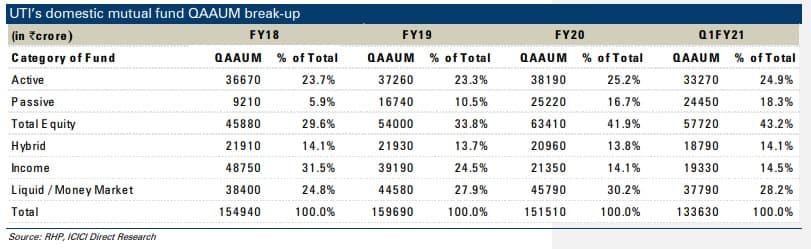
UTI AMC Employees Provident Fund Organization (EPFO), Postal Life Insurance (PLI), National Skill Development Fund (NSDF), and PMS provide advice to various offshore and domestic accounts. Whereas of June 2020, the AUM for PMS business was Rs. 6,97,050 crores.
As of June 2020, its distribution network includes 163 UTI Financial Centers (UFCs), 257 Business Development Associates (BDAs), and Chief Agents (CAS) (40 of which are OPAs) and 43 other OPAs. Most of these are in every case in the B30 cities. While the company has offices in London, Dubai, Guernsey, and Singapore. It markets offshore and domestic mutual funds to offshore investors who want to invest in India.
AUM and QAAUM
The overall AUM of the Indian mutual fund industry has grown at a healthy pace over the past ten years, with the expanding domestic economy, strong currents, and growing investor participation, especially from individual investors. The average AUM at 13 percent CAGR as of March 2010 increased from Rs. 7.6 lakh crores (trillion) to Rs. 27 lakh crores by March 2020.
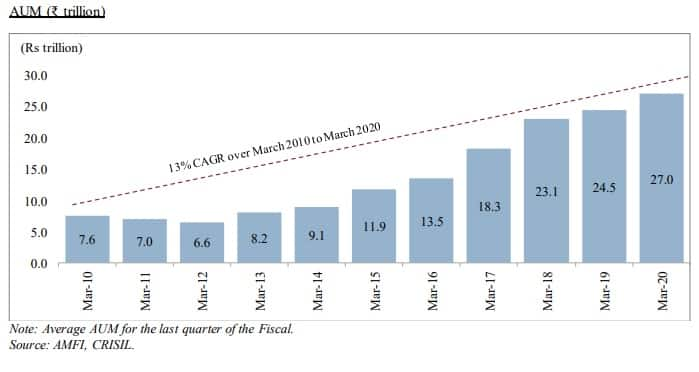
The average AUM of equity-based funds increased by about 20.5 percent from Rs. 3.7 lakh crores in March 2015 to Rs. 9.7 lakh crores in June 2020, while the average AUM debt-based fund grew at around 4.9 CAGR. Percentage, from Rs. 5.3 trillion by March 2015 to Rs. 6.8 trillion by June 2020, which is mainly driven by the IL & FS default. Subsequent NBFC crisis and then exacerbated by the COVID-19 global epidemic.
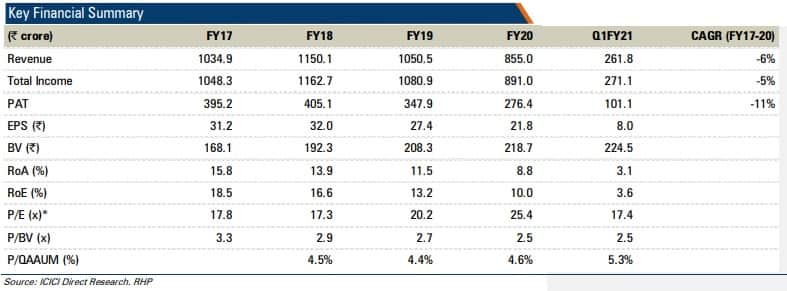
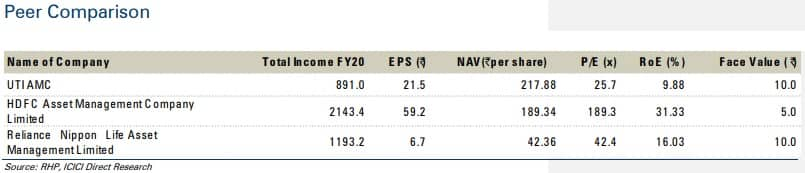
The company is comparable to its listed counterparts – HDFC Asset Management Company and Nippon Life Asset Management.
9) Management
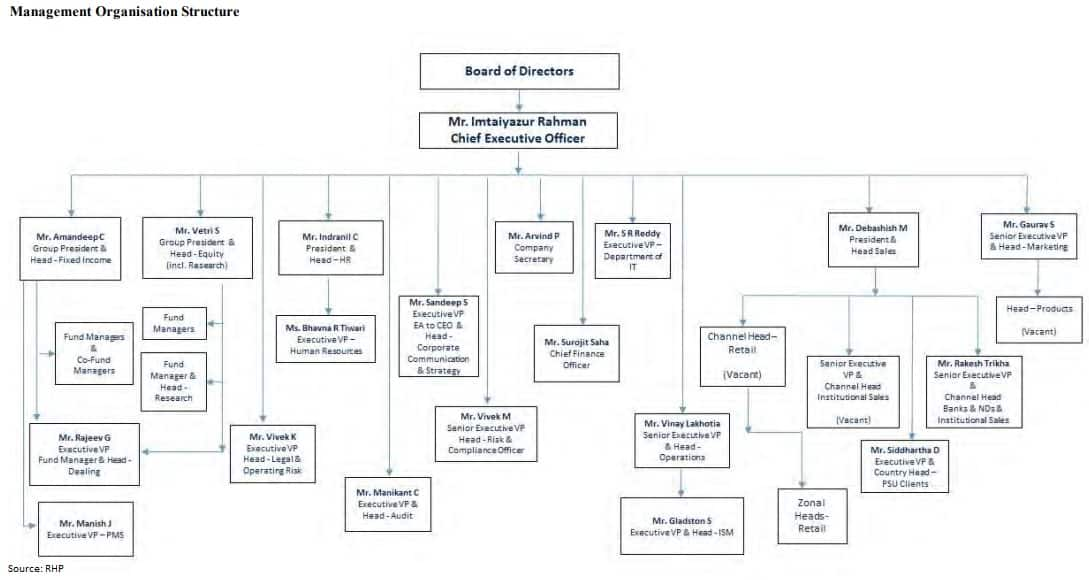
Dinesh Kumar Mehrotra is the Non-Executive Chairman and Independent Director, while Imtaiyazur Rehman is the Full-Time Director and Chief Executive Officer.
Imtaiyazur has 30 years of experience in management, business leadership, and forming strategic alliances. He associated with UTI AMC since 2003.
Ashok Shah, Deepak Kumar Chatterjee, Deepali H Sheth, Jayashree Vaidyanathan, Narasimhan Seshadri, Rajiv Cocker, Uttara Dasgupta are the independent directors. While Edward Cage Bernard and Fleming Madson are the non-executive directors.
10) Shareholders
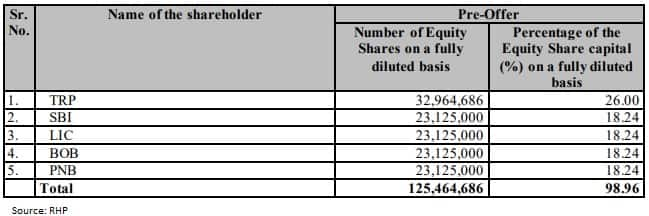
UTI AMC is a professionally managed company and no recognizable promoter. State Bank of India, LIC, Bank of Baroda, PNB and T Row hold 18.24 percent, 18.24 percent, 18.24 percent, 18.24 percent, and 26 percent of pre-offer paid-up equity share capital.
Post issue, PNB share reduced to 15.24 percent and TRP to 23 percent. SBI, LIC, and Bank of Baroda will each reduce their stake to 9.99 percent.